

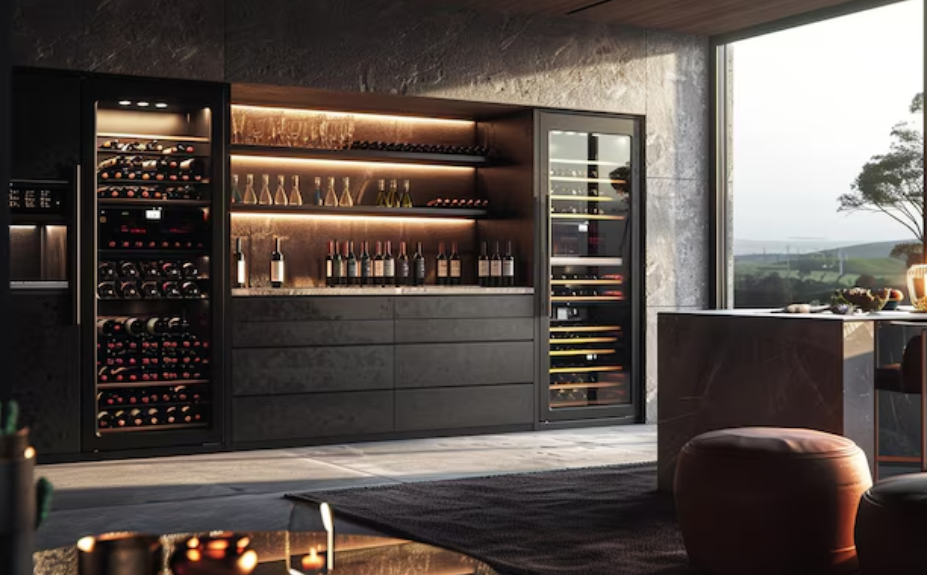
Square footage doesn’t determine whether a collection looks impressive, design choices do. A Small Wine Storage Room tucked under a staircase or carved out of a closet can hold its own against a sprawling basement cellar if the layout gets planned around efficiency instead of wasted gaps between shelves and walls.
Most small spaces fail not because they’re genuinely too tight, but because the racking inside was designed for a bigger room and just shrunk down proportionally. That approach wastes precious inches everywhere. Real small space design starts from scratch, measuring exact wall dimensions and building storage that fits the room’s actual shape rather than forcing a generic layout into it.
Measure Every Inch First
Small rooms punish guesswork immediately. A rack that’s an inch too deep blocks the door from swinging fully open, and a shelf spacing miscalculation wastes vertical inches that could’ve held another dozen bottles stacked properly.
Professional measuring goes beyond length and width too, accounting for door swing, HVAC vents, outlet placement, anything protruding from a wall that eats into usable space. Skipping this step means discovering the problem after racking is already built and installed, which is a far more expensive mistake to fix.
Go Vertical Whenever Possible
Floor space runs out fast in a small room, but ceiling height often goes underused entirely. Tall, narrow racking systems that climb toward eight or nine feet can hold significantly more bottles than wide, short shelving spread across the same footprint.
A rolling ladder or simple step stool solves the reach problem for higher rows, and honestly it adds a bit of character too, a small ritual of climbing up for that special bottle rather than just grabbing whatever’s at eye level. Vertical thinking alone can double capacity in tight rooms.
Diagonal Racking Saves Space
Straight horizontal rows waste depth that diagonal cuts recover almost automatically. Angled bottle slot’s let wine sit at a slight tilt, which keeps corks moist while also packing bottles closer together than a flat, boxy grid pattern ever manages in the same square footage.
This detail matters more in custom wine cellars san Francisco homeowners request specifically because so many city properties deal with cramped basements or narrow closets converted into storage. Diagonal racking turns an awkward, shallow space into something that actually holds a real collection.
Mirrors Create Visual Depth
A small room doesn’t have to feel small if the design plays a few tricks with perception. Mirrored panels along one wall double the visual depth of a space instantly, making a four foot closet read as something closer to eight feet the moment you walk in and glance around.
Mirrors also bounce whatever lighting exists throughout the room, which helps in spaces without natural windows, a common situation for cellars tucked into interior closets or under stairs where sunlight was never part of the original floor plan anyway.
Glass Doors Open Sightlines
A solid door on a tiny room makes the space feel sealed off and forgettable, tucked away like a broom closet nobody thinks about. Glass, even partial glass panels, lets the eye travel through into the room, which makes the whole area register as bigger than its actual dimensions.
Temperature sealed glass doors now perform just as well as solid wood ones too, so there’s no real tradeoff on climate control anymore. The visual payoff, seeing bottles from the hallway or adjacent room, often outweighs whatever privacy a solid door might have offered instead.
Multi Purpose Furniture Pieces
Small storage rooms sometimes double as tasting nooks, and furniture that serves two jobs at once stretches the space further than dedicating square footage to a single function ever could. A narrow counter with wine storage built underneath works both as prep space and display simultaneously.
This approach works particularly well in condos and apartments where every room already pulls multiple duties. A cellar that’s also a small bar area, pour a glass, set it on the counter, grab a bottle from the wall behind you, makes far better use of limited square footage than isolated storage alone.
Conclusion
Small rooms just need smarter planning, not more square footage, to hold a collection that looks genuinely impressive rather than cramped or improvised as an afterthought.
Homeowners working with limited space tend to get the best results partnering with a team like customwinecellarssanfrancisco.com, where a Small Wine Storage Room gets designed around exact dimensions from day one, turning what could’ve been a tight, awkward closet into a showcase guests actually notice walking past.