

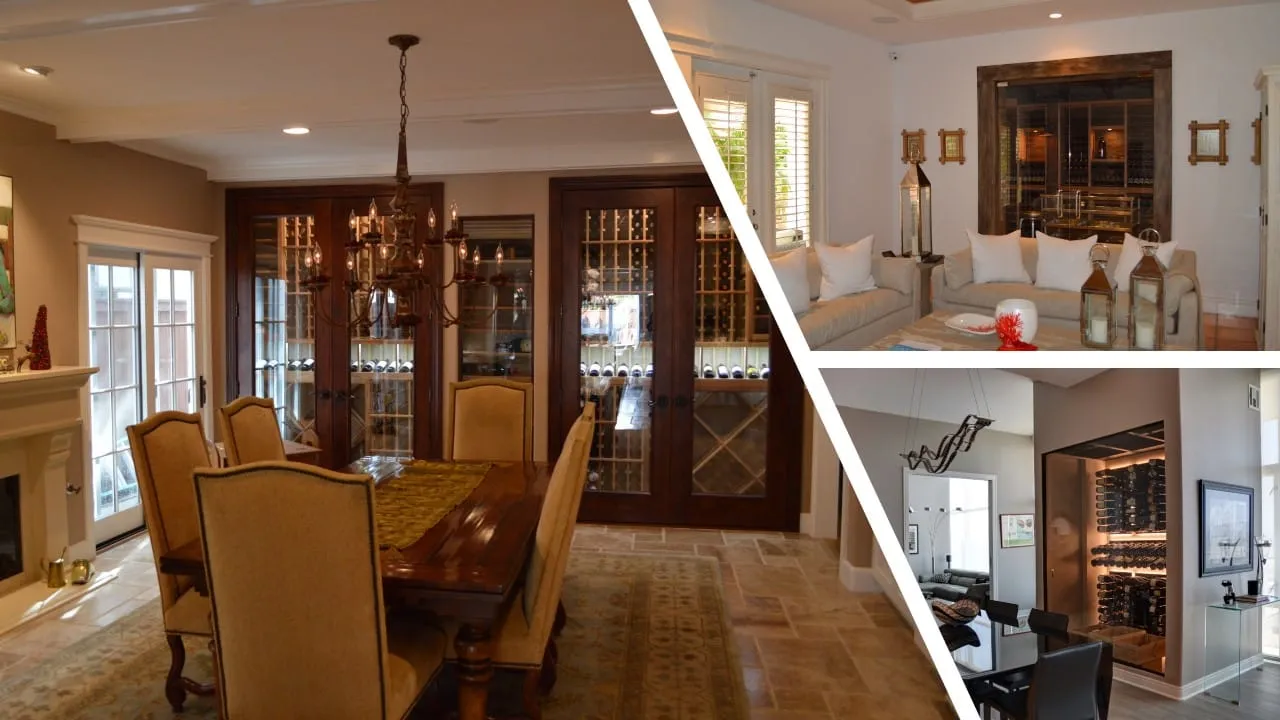
A home wine cellar is often discussed in terms of racks, glass, wood, and lighting. Those choices shape the experience, but the room also has to maintain conditions suitable for storage. That makes the enclosure and mechanical plan part of the design from the beginning.
The important idea is coordination. Cooling equipment cannot compensate indefinitely for gaps, weak insulation, excessive heat gain, or poor airflow. When the room and the equipment are planned together, the visual design has a stronger technical foundation.
Start With the Room Envelope
Walls, ceiling, floor, and door define the space the cooling equipment must manage. Their construction affects how quickly heat and moisture move in and out. This should be understood before finished surfaces make changes difficult.
For residential wine cellars Los Angeles, local room conditions can vary widely from one home to another. A cellar beside a warm garage presents different challenges from an interior room with conditioned spaces on every side.
Match Equipment to the Actual Load
Room volume is only one factor in equipment selection. Glass area, insulation, surrounding temperature, door use, lighting, and even equipment location can influence the load. A system chosen only from square footage may miss important details.
The goal is stable operation, not simply buying the largest available unit. Oversized and undersized equipment can each create problems, so sizing should follow the completed room concept rather than happen before the enclosure is known.
Plan Airflow Before Filling the Walls With Racks
Cold air needs a path through the room. Deep storage, decorative panels, or racks placed directly in front of supply and return areas can interfere with circulation. Mechanical and racking layouts should therefore be reviewed together.
Even a small open zone can help if it is placed where air needs to move. These decisions may be almost invisible in the finished cellar, yet they can have a meaningful effect on how evenly the space performs.
Think Beyond the Thermostat Reading
A Temperature controlled residential wine cellar should be assessed by consistency, not by a single number observed once. Door openings, warm evenings, and changes in the surrounding house can all affect how the room behaves over time.
Controls should be easy to read, and owners should know what normal operation looks and sounds like. Familiarity makes it easier to notice a change early instead of discovering a problem only after bottles or finishes show signs of stress.
Keep Service Access Practical
Cooling components eventually need inspection, cleaning, or repair. A seamless wall is appealing, but not if a technician must remove permanent racking to reach a filter or drain. Access should be part of the original design.
Discreet panels and thoughtful equipment placement can protect the visual concept without sacrificing maintainability. The most elegant solution is often the one that hides complexity while still allowing the room to be serviced without disruption.
Test the Room Before Loading the Collection
After installation, allow the cellar to run and stabilize before filling every rack. This gives the team time to confirm operation, check for unusual condensation, inspect door closure, and verify that airflow reaches the full room.
An empty or lightly loaded room is easier to adjust. Once hundreds of bottles are in place, accessing equipment and changing rack positions becomes more complicated. A short commissioning period can prevent avoidable frustration later.
Pay Attention to Door-Opening Habits
A cellar beside an entertaining space may be opened repeatedly over a short period, while a private storage room may stay closed for long stretches. Those patterns can influence how the entrance and cooling strategy are evaluated during design.
The goal is not to eliminate normal use, but to understand it. A room planned around realistic opening frequency is easier to assess than one designed around ideal conditions that rarely occur once people start living with the space.
Conclusion
Residential wine storage works best when climate control is treated as part of the architecture rather than hidden equipment added at the end. Enclosure quality, load calculation, airflow, controls, and service access all support the room’s long-term function.
Homeowners exploring climate-conscious cellar ideas can review examples at customwinecellarslosangeles.com and use them to ask practical questions about how each design will perform in the specific location of their home.