

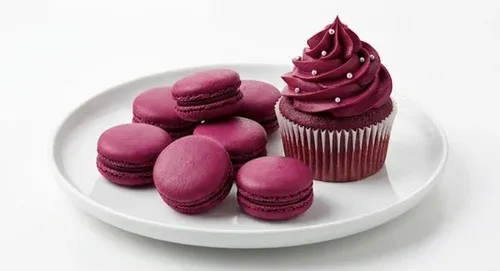
Acidic beverages, gummies, fruit preparations, and some confectionery products create a useful environment for certain anthocyanin pigments. That is one reason black carrot has become a familiar option when developers want red-to-purple shades from a plant source.
Its usefulness is not automatic, though. Acidity, heat, light, oxygen, and the surrounding ingredients still shape the final result. The best formulations treat black carrot as a responsive pigment system rather than a fixed shade in a bottle.
Anthocyanins Respond to the Formula Around Them
Black carrot is rich in anthocyanins, and those pigments change appearance with pH. In more acidic systems, they tend to show redder tones, while the hue can move toward purple as conditions change. That behavior can be useful when the product target fits the chemistry.
Developers should therefore record the real pH of production batches, not just the theoretical recipe value. Fruit concentrates, acids, minerals, and other ingredients can shift the final number enough to alter shade.
Color Selection Should Begin With the Target pH
When teams evaluate Black Carrot color, they should screen it in the actual acid system. A sample prepared in plain water may not predict what happens in a berry drink, gummy syrup, or fruit filling.
Make several neutralized samples around the normal production range rather than testing one point. This creates a visual tolerance window and shows whether ordinary process variation could push the shade outside the brand target.
Concentration Affects More Than Darkness
A Black Carrot Concentrate can deliver strong color, but dosage also influences undertone. Increasing concentration may deepen a red-purple shade rather than simply making the same hue darker.
That matters when matching an existing product. A direct dosage increase may overshoot the desired undertone, so blending or a different pigment strength can be more effective. Instrumental color data can help separate intensity from hue changes.
Heat Still Needs to Be Tested
Acylated anthocyanins found in black carrot are often valued for useful stability, but thermal processing can still affect the finished appearance. Pasteurization, candy cooking, and hot filling involve different exposure times and temperatures.
Run the candidate through the actual process and check it again after cooling. Some products change visually because the food matrix itself darkens during heat, so the pigment should not be blamed until the control sample has been compared.
Light and Oxygen Can Shape Shelf Life
Even a strong day-one color can fade if the product sits under retail lighting or carries too much oxygen in the package. Headspace, bottle transparency, closure quality, and storage temperature can all influence how quickly the shade changes.
Shelf-life work should use the intended package. If marketing wants a clear bottle because the color is part of the product appeal, R&D may need to test label coverage, light exposure, or antioxidants as part of the complete system.
Flavor and Visual Expectation Should Match
Deep red and purple shades create flavor expectations before the first bite or sip. Consumers may anticipate berry, grape, cherry, or other fruit notes based largely on appearance. A mismatch can make a technically sound formula feel less convincing.
Final sensory sessions should therefore include the real color. Evaluating flavor in an uncolored base is useful for development, but the finished product should be judged as one experience because visual cues can influence perceived flavor intensity.
Use Instrumental Data to Support Visual Decisions
Human vision is excellent at noticing obvious differences, but lighting and surrounding colors can influence judgment. A simple color measurement can help teams track whether a batch is moving redder, bluer, lighter, or darker over time.
Numbers should not replace sensory review, but they give useful context when several pilot lots are close. They are especially helpful during scale-up, when small process changes may produce subtle shifts that are hard to describe consistently.
Conclusion
Black carrot is especially useful in acidic systems because its anthocyanin chemistry can support attractive red and purple shades. The key is to control pH, processing, packaging, and dosage rather than assuming the pigment will behave the same in every formula.
Developers can review black-carrot-based options and application support at foodrgb.com. Testing across the normal pH range and through real shelf-life conditions gives teams a stronger basis for consistent commercial color.