

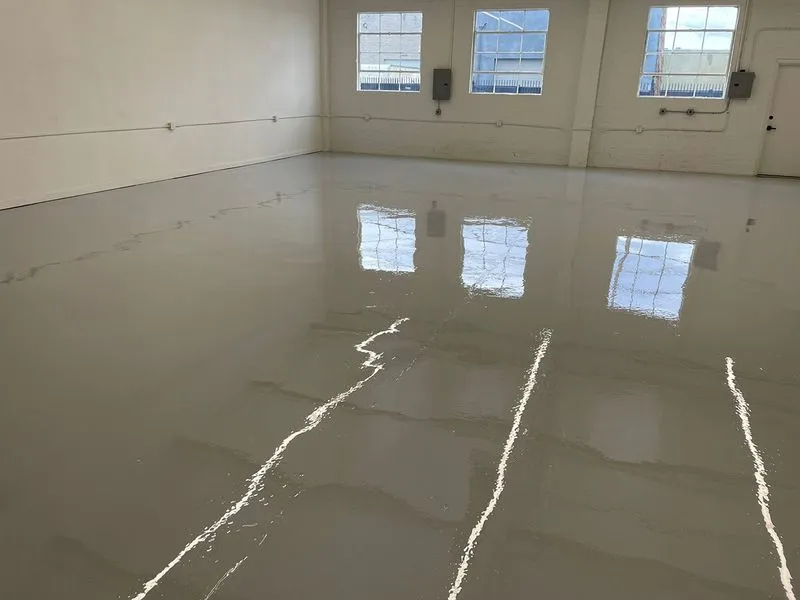
Warehouse floors need to support the daily movement of people, equipment, products, and vehicles without becoming difficult to maintain. Forklifts, pallet jacks, carts, storage racks, and frequent cleaning can all place demands on the concrete surface. Choosing a suitable coating therefore requires careful consideration of the facility’s workflow and operating conditions. Warehouse size alone does not determine the right flooring system. Traffic patterns, moisture, surface condition, equipment weight, maintenance routines, and future operational needs should all be considered before installation.
Planning Warehouse Epoxy Flooring
Warehouse epoxy flooring can provide a finished surface designed for demanding commercial environments when the appropriate system is selected and properly installed. Warehouses often have large floor areas, making consistency and practical maintenance especially important.
Start by identifying the areas that receive the most traffic. Forklift routes, loading zones, packing stations, entrances, and areas around storage racks may experience different levels of wear.
The selected flooring system should be appropriate for the facility’s actual operations rather than chosen only because it looks attractive. Discuss the expected traffic and equipment movement with the flooring professional before deciding on a material.
Assess the Existing Concrete
The condition of the concrete should be evaluated before any coating work begins. Cracks, stains, damaged areas, old coatings, and surface contamination can all influence the preparation process.
Warehouse floors may have accumulated years of dirt, oil, tire marks, and other materials from daily operations. These contaminants need to be addressed so the coating can be installed over a properly prepared surface.
Mechanical preparation, repairs, cleaning, or moisture testing may be necessary depending on the condition of the slab. A professional inspection can provide a clearer picture of what the project requires.
Compare Polyaspartic Flooring
polyaspartic flooring is another coating option that can be considered for commercial and industrial spaces. It is available in different formulations and can offer particular installation and performance characteristics depending on the product.
One important consideration is the facility’s operating schedule. Some systems may offer different curing or installation characteristics than traditional coatings, which can be relevant when minimizing downtime matters.
However, product specifications vary, so warehouse operators should ask the contractor which formulation is being recommended and why. The decision should be based on traffic, environmental conditions, surface preparation, and project requirements.
Map Traffic Patterns
Warehouse traffic is rarely evenly distributed. Certain routes may receive repeated forklift movement while other areas experience only occasional pedestrian traffic.
Mapping these patterns before installation can help identify areas that deserve particular attention. Turning points, loading zones, entrances, and locations where equipment frequently stops can experience different stresses from open storage areas.
Future workflow should also be considered. If the warehouse is expected to add equipment, change storage layouts, or increase traffic, discuss those plans before selecting the flooring system.
Consider Moisture and Cleaning
Warehouses can experience moisture from outdoor weather, cleaning procedures, condensation, and vehicle traffic. The facility’s specific moisture conditions should be evaluated before installation.
Cleaning routines also matter. Some warehouses use automatic scrubbers or industrial cleaning equipment, while others rely on manual cleaning. The flooring system should fit the maintenance process rather than requiring a completely different routine.
Ask about compatible cleaning products and equipment. Following appropriate maintenance recommendations can help preserve the finished surface.
Think About Safety
A warehouse floor should support safe movement for employees and equipment. Visibility is one useful consideration because floor colors and markings can help distinguish work zones, walkways, storage areas, and equipment routes.
Surface texture also deserves attention. The finish should provide appropriate traction for the facility’s conditions without creating unnecessary cleaning difficulties.
Floor markings can be incorporated into the overall layout to improve organization. Their placement should reflect actual traffic patterns rather than simply dividing the space into visually convenient sections.
Plan Around Operations
Flooring installation can temporarily affect warehouse activity. Equipment may need to be moved, certain areas may need to close, and employees may require alternative routes.
Discuss scheduling with the contractor before work begins. A phased installation may be useful for some facilities where completely stopping operations is difficult.
Understanding curing and return-to-service requirements can also help warehouse managers plan labor, inventory movement, and equipment use around the project.
Consider Long-Term Maintenance
A practical maintenance routine should support a warehouse coating. Regular removal of dirt and debris can help reduce surface abrasion, especially in high-traffic areas.
Spills should be addressed promptly according to the manufacturer’s recommendations. Periodic inspections can also identify damaged areas, worn markings, or locations requiring additional attention.
Keeping maintenance records can be useful for larger facilities because it provides a reference for cleaning schedules, repairs, and future flooring work.
Conclusion
The right warehouse floor depends on the building’s actual operating conditions. Traffic, equipment, moisture, concrete condition, cleaning routines, safety requirements, and installation scheduling should all be part of the decision. Both epoxy and polyaspartic systems can have useful applications, but the specific product and installation method should be selected according to the facility rather than a general assumption. If you are evaluating flooring options for a warehouse or other demanding commercial space, epoxysurfaceprosca.com can be explored to learn more about available coating solutions and determine which approach may suit your facility.