

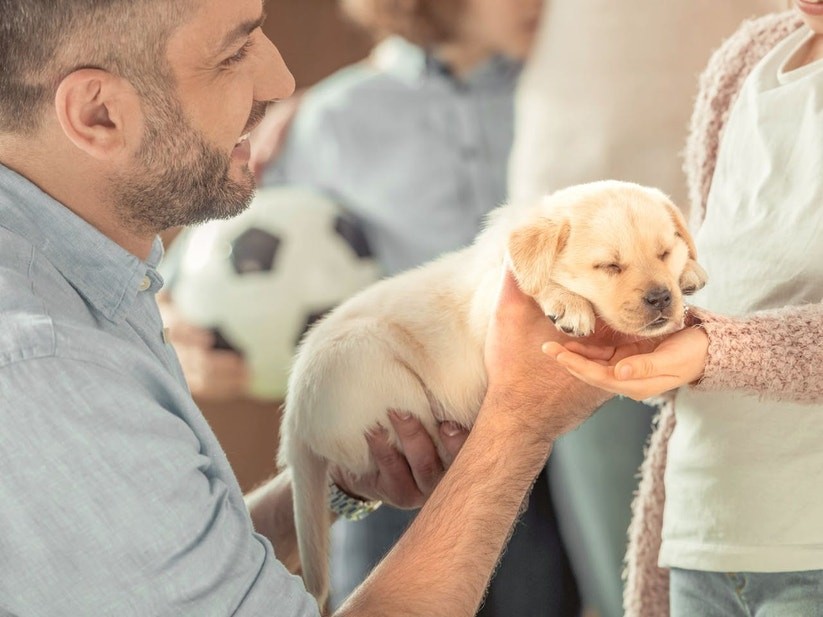
A puppy jumping against your legs can be adorable. A puppy dragging you toward another dog might even make you laugh. Then several months pass. The dog is heavier, stronger, and still doing the same things.
That is when small habits suddenly stop feeling small.
Early training is not about expecting a young dog to behave like a perfectly mannered adult. Puppies are curious, easily distracted, and still figuring out how the household works. The useful goal is simpler: start showing them which behaviors will still be welcome when they grow up.
Think About the Adult Dog for a Moment
It is easy to make decisions based on the puppy standing in front of you.
Imagine that same behavior from a full-grown dog.
Will jumping still be acceptable? What about pulling toward every person on a walk? Will you want the dog climbing onto visitors whenever the front door opens?
Thinking ahead helps owners decide which habits deserve attention now.
People searching for the best dog training in austin may therefore want more than a puppy that can perform several basic cues. Training should also help an owner understand how today’s routine can influence the dog’s behavior months from now.
The Front Door Is a Good Classroom
Doors create plenty of excitement. Outside is interesting, visitors appear there, and walks often begin there.
That makes a doorway a surprisingly useful place to practice.
Rather than opening the door while the puppy is pushing forward, an owner can introduce a brief pause. At first, that pause might last only a second. There is no need to expect a long, perfect wait from a young puppy.
With repetition, the routine becomes familiar: calm behavior helps the door open.
It is a small lesson, but one that can become very useful as the dog grows stronger.
Walking Starts Before You Leave Home
Leash habits do not begin halfway down the street.
Look at what happens when the leash first appears. Does the puppy race around the room? Bite it? Jump repeatedly while somebody tries to attach it?
That excitement can follow everyone straight out of the house.
Taking an extra moment before leaving may help. Let the puppy settle enough to have the leash attached without turning it into a wrestling match. The goal is not absolute stillness. You are simply beginning the walk with a little communication.
Once outside, keep expectations reasonable. Puppies want to sniff and investigate. That is part of discovering their surroundings.
Greetings Need Practice Too
Puppies attract people. Unfortunately, people also have a habit of rewarding exactly what owners are trying to change.
A puppy jumps. The person laughs, bends down, and starts petting it.
From the puppy’s perspective, jumping worked brilliantly.
If four paws on the ground will matter later, greetings are a good place to begin teaching it now. Ask willing friends or family members to wait briefly before giving attention when the puppy is bouncing around.
This does not have to make greetings dull. The puppy can still enjoy meeting people; it is simply learning a more manageable way to do it.
Keep Lessons Short Enough to Be Fun
Young dogs do not need marathon training sessions.
A couple of useful minutes before breakfast may be enough. Another short practice can happen later while playing or before going outside.
With puppy obedience training austin, owners can also learn how to work these lessons into daily life instead of relying entirely on formal practice periods.
That matters because the puppy is learning throughout the day anyway.
The question is whether those everyday experiences are supporting the habits the family actually wants.
Mistakes Will Happen
There will be accidents indoors. The puppy will chew something it should not. A cue that worked yesterday may appear completely unfamiliar today.
That is puppy life.
Rather than treating every mistake as a setback, look for patterns. Does chewing become worse when the puppy is bored? Do accidents tend to happen after play? Does listening become difficult when the environment gets busy?
Those observations can help owners adjust routines before problems repeat.
Progress is often easier to see over several weeks than over several hours.
Conclusion
The puppy stage passes quickly, but habits formed during those early months can stay around for a long time. Owners do not need to demand perfect obedience. They can focus instead on useful routines around doors, walks, greetings, play, and other ordinary parts of the day.
Starting early makes it easier to shape behaviors before a small puppy becomes a much larger dog. Owners looking for professional support with that process can visit caninemoxy.com to learn more about its dog-training services and owner-focused approach.