

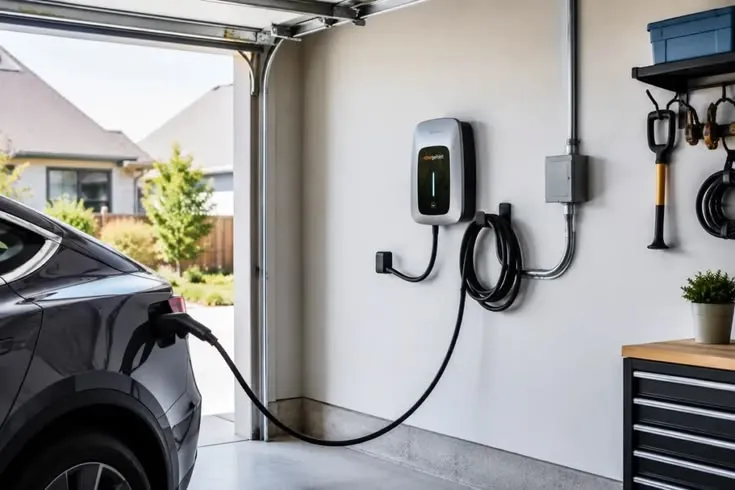
Switching to an electric vehicle changes how drivers think about transportation. Instead of stopping at gas stations, many people begin treating charging as part of their daily routine. For households in Quebec, where commuting distances, winter weather, and electricity use vary considerably, establishing practical charging habits can make vehicle ownership easier.
A home charging setup should fit the household’s schedule rather than introduce additional complications. From managing charging times to sharing equipment between family members, several everyday considerations can influence how successfully a charging station serves its users.
Match Charging Habits to Daily Driving
Not every electric vehicle owner needs to recharge a nearly empty battery every night. For many households, daily driving consumes only a portion of the available battery capacity.
A driver commuting between Montreal and nearby communities may have different needs from someone who primarily uses a vehicle for short local trips.
Before selecting equipment, it helps to calculate typical weekly driving distances and consider how many hours the vehicle remains parked at home.
Professional Residential Ev Charging Installation can provide a convenient way to replenish battery capacity during those parked hours.
The appropriate charging rate depends on the vehicle’s capabilities, the available electrical supply, and individual driving habits.
Choosing equipment around realistic requirements can prevent unnecessary spending.
Build Charging Into an Evening Routine
One advantage of home charging is the ability to connect the vehicle after returning from work.
Rather than waiting beside the vehicle, drivers can generally leave compatible charging equipment to operate according to its designed controls and safety features.
Some vehicles and charging stations support scheduled charging. This allows households to select preferred charging periods without manually starting every session.
Quebec drivers should check their electricity rate arrangements before assuming overnight charging always costs less. Savings depend on the applicable tariff and any available time-sensitive pricing program.
A consistent routine also helps drivers avoid discovering insufficient battery charge shortly before an important journey.
Consider Households With Multiple Drivers
A single electric vehicle is relatively straightforward to accommodate. When two family members own electric vehicles, charging becomes more complicated.
Both drivers may return home at similar times, especially during the working week.
Rather than assuming two high-powered chargers are necessary, households can compare driving distances, parking schedules, and charging priorities.
Some compatible charging systems can share available electrical capacity between vehicles. Others allow charging sessions to be scheduled separately.
These arrangements require careful equipment selection and appropriate electrical planning.
A qualified electrician can assess whether the available capacity supports the proposed setup.
Understand How Winter Changes Charging Behaviour
Cold temperatures can increase energy consumption and affect the amount of driving range available from an electric vehicle.
In Montreal, drivers may notice these changes during periods of severe winter weather.
Cabin heating, battery temperature management, road conditions, and driving habits can all influence energy use.
Some vehicles allow cabin preconditioning while connected to charging equipment, which may help preserve battery energy for the trip.
Charging cables also need to remain accessible when snow accumulates around the parking area.
A practical installation should therefore account for safe cable handling, winter maintenance, and convenient access throughout the year.
Keep Household Electricity Demand in Balance
Electric vehicle charging adds another electrical load to a home that may already use electricity for heating, cooking, and other essential functions.
This makes the overall household load an important consideration.
In some properties, the existing electrical system can accommodate charging without major modifications.
Other homes may need additional circuits, energy management equipment, or professional Residential Electrical Panel Replacement when the current installation cannot safely meet the intended electrical requirements.
Panel replacement should not be assumed necessary solely because a homeowner purchases an electric vehicle.
An electrical assessment helps determine the appropriate solution based on actual demand and equipment condition.
Make Charging Equipment Easy to Use
Convenience often depends on small installation details.
A charging cable that crosses a walkway can become inconvenient, while poorly positioned equipment may be difficult to reach when parking arrangements change.
Homeowners should consider:
-
The location of the vehicle’s charging port.
-
Whether the parking space is covered or outdoors.
-
Cable length and storage arrangements.
-
Accessibility during snowy weather.
-
How another family vehicle might use the same space.
-
Whether charging schedules need to be shared.
Good planning makes the charging setup easier to use without changing daily routines unnecessarily.
Conclusion
Home EV charging is most successful when it fits the way a household actually uses its vehicles. Understanding daily travel, coordinating charging schedules, and preparing for winter conditions can make the experience more convenient.
For Quebec homeowners considering charging infrastructure, electrivolt.ca/en provides information about electrical services and home charging installations in Greater Montreal. Appropriate equipment selection and professional electrical planning can help create a practical charging arrangement for everyday use.